Susmit Das
AI researcher · compulsive tinkerer

Hi, I’m Susmit.

I like building things. This used to mean combat robots. These days it also means language models, privacy systems, and spending unreasonable evenings convincing very large open-weight models to run on hardware they were never designed for.

I’m a research scientist at PrivaSapien. I did my master’s at IISc, focused heavily on ML/NLP, and I do independent research when a question bothers me enough to chase it down. Sometimes that becomes a paper; sometimes it becomes a weird fork or script I keep around because it solved my problem.

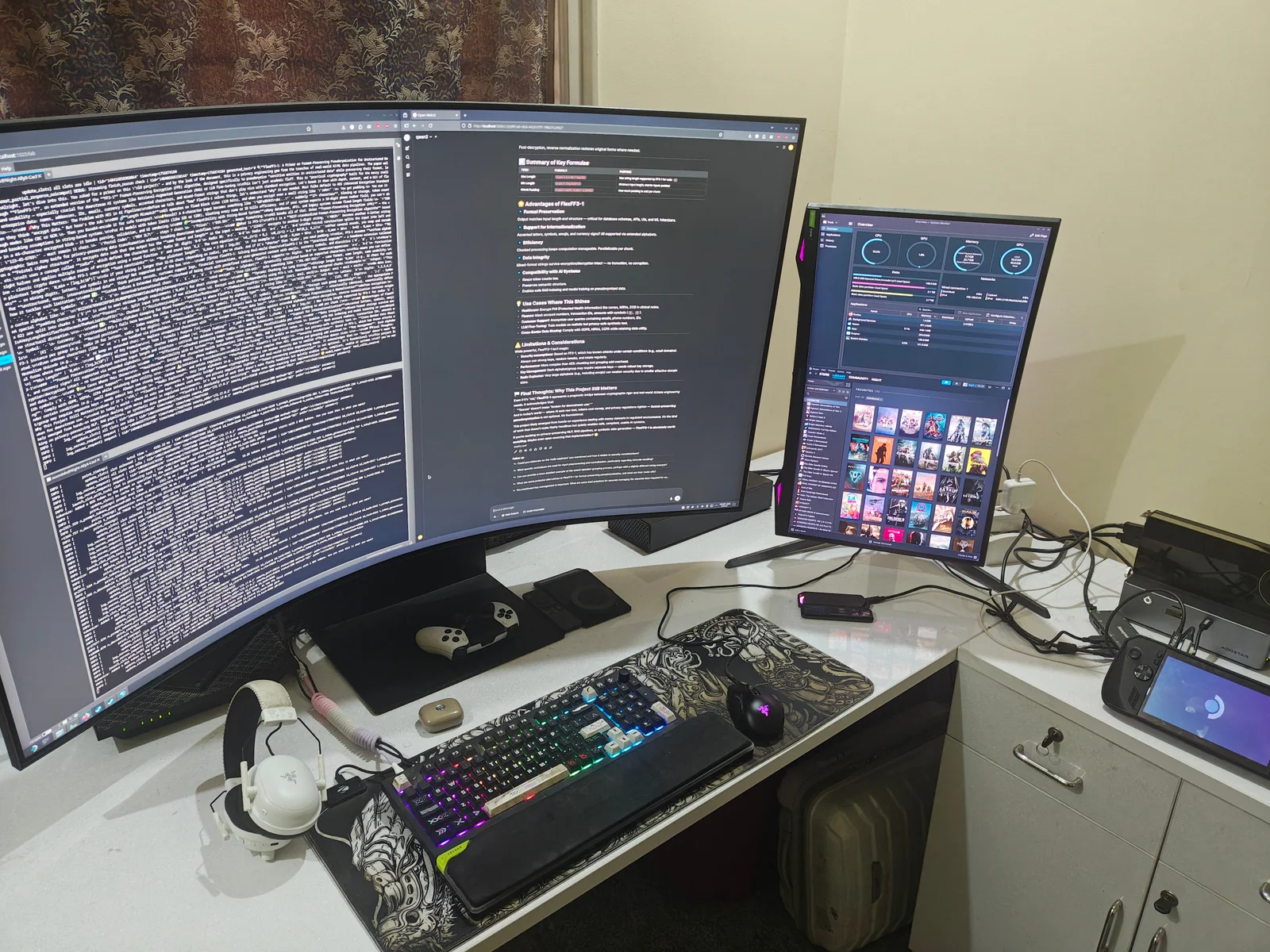
My desk with a large ultrawide display, a vertical monitor, code and local model tooling on screen.a perfectly normal number of pixels

A few rabbit holes that escaped into papers

I do not have one grand theory of everything. Usually I notice something that feels odd, build enough machinery to poke at it properly, and see where it goes.

Findings of ACL 2026 · solo

TIME: Temporally Intelligent Meta-reasoning Engine for Context-Triggered Explicit Reasoning

I was bothered by the all-or-nothing way explicit reasoning is usually exposed: either the model thinks in one long block up front, or it does not. TIME trains reasoning as something the model can bring in when the conversation actually calls for it, including halfway through an answer.
Under review at ICLR 2027

Ephemeral Models, Durable Claims

How much published AI research depends on closed models nobody outside the provider can preserve? I measured it across 53,538 archival papers, then checked whether the models were still around.

Submitted to ACM FAccT 2027

Walk Me Through Your Work

An explanation can tell me something about how a model behaved and still give me no good reason to trust the answer in front of me. This is my attempt to make “show your work” mean something precise.

IEEE ISoPE 2025 · industry research · first author

PERAI: Privacy Enhancing & Responsible AI Framework for Data & AI Lifecycle

Privacy-by-design work with colleagues at PrivaSapien, covering the data and AI lifecycle rather than treating privacy as a filter bolted onto the end.

I was building stuff before the LLM thing.

The hardware has changed. The basic impulse has not.

First: combat robots.

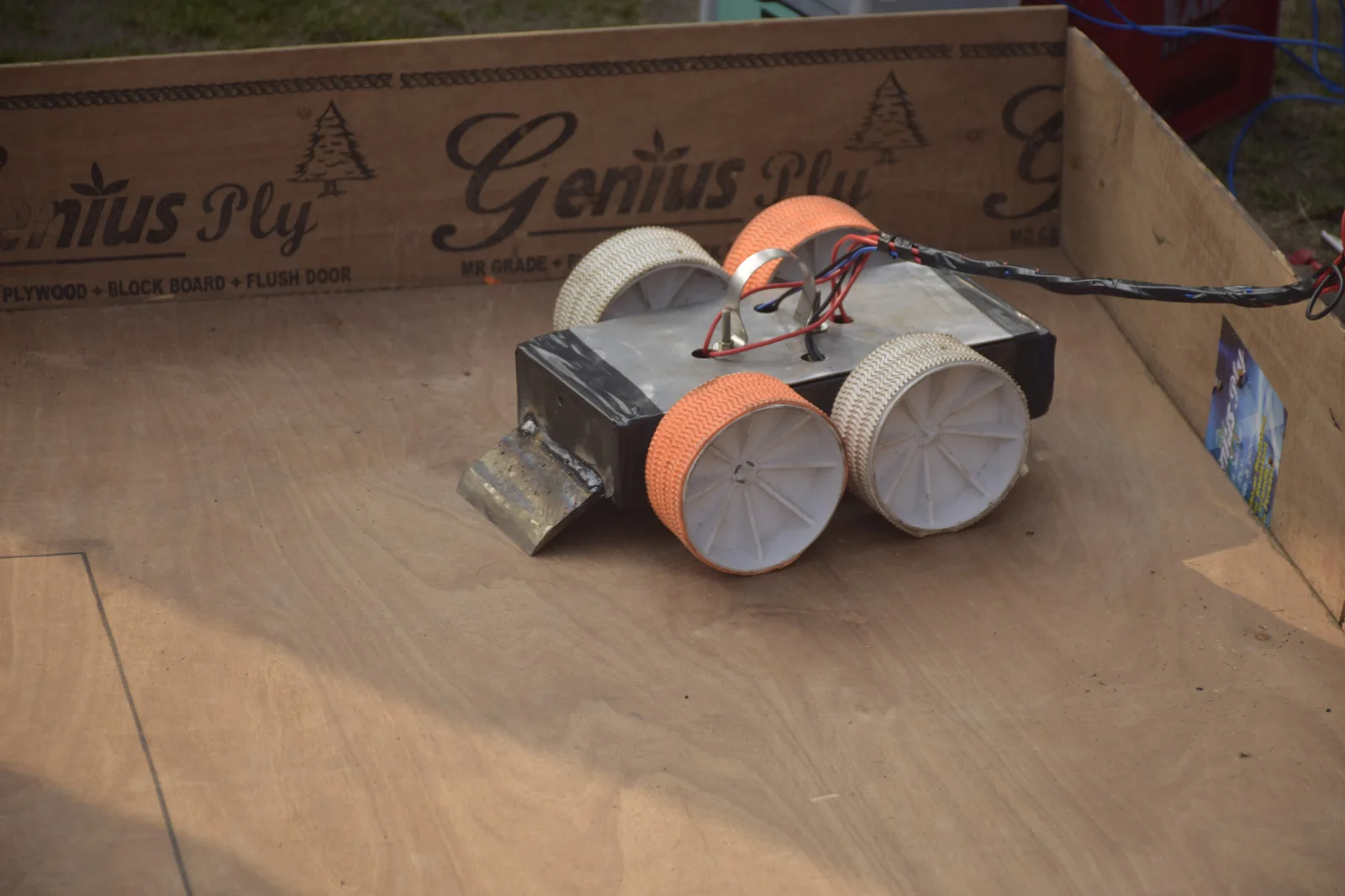
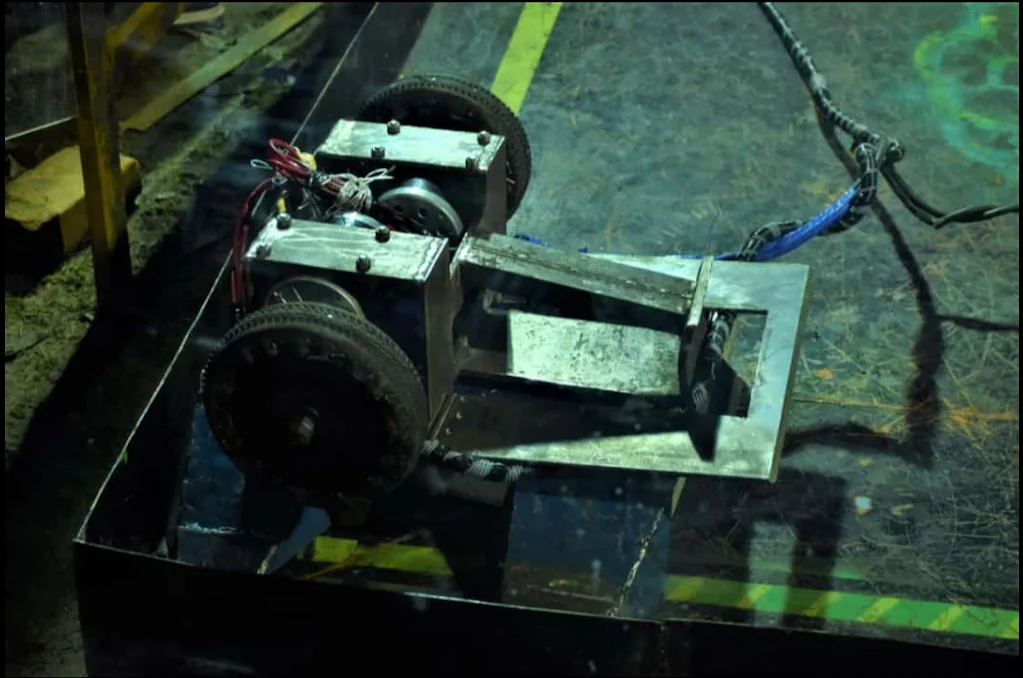
During my CS undergrad I spent a frankly disproportionate amount of time designing, fabricating and competing with combat robots at events around India. It was messy, mechanical, electrical, occasionally destructive, and extremely fun.

It also taught me a durable lesson: a design that sounds clever on paper still has to survive contact with the arena.

A small four-wheeled combat robot in a wooden arena.An earlier metal-framed combat robot in an arena.

Now: unnecessarily large models at home.

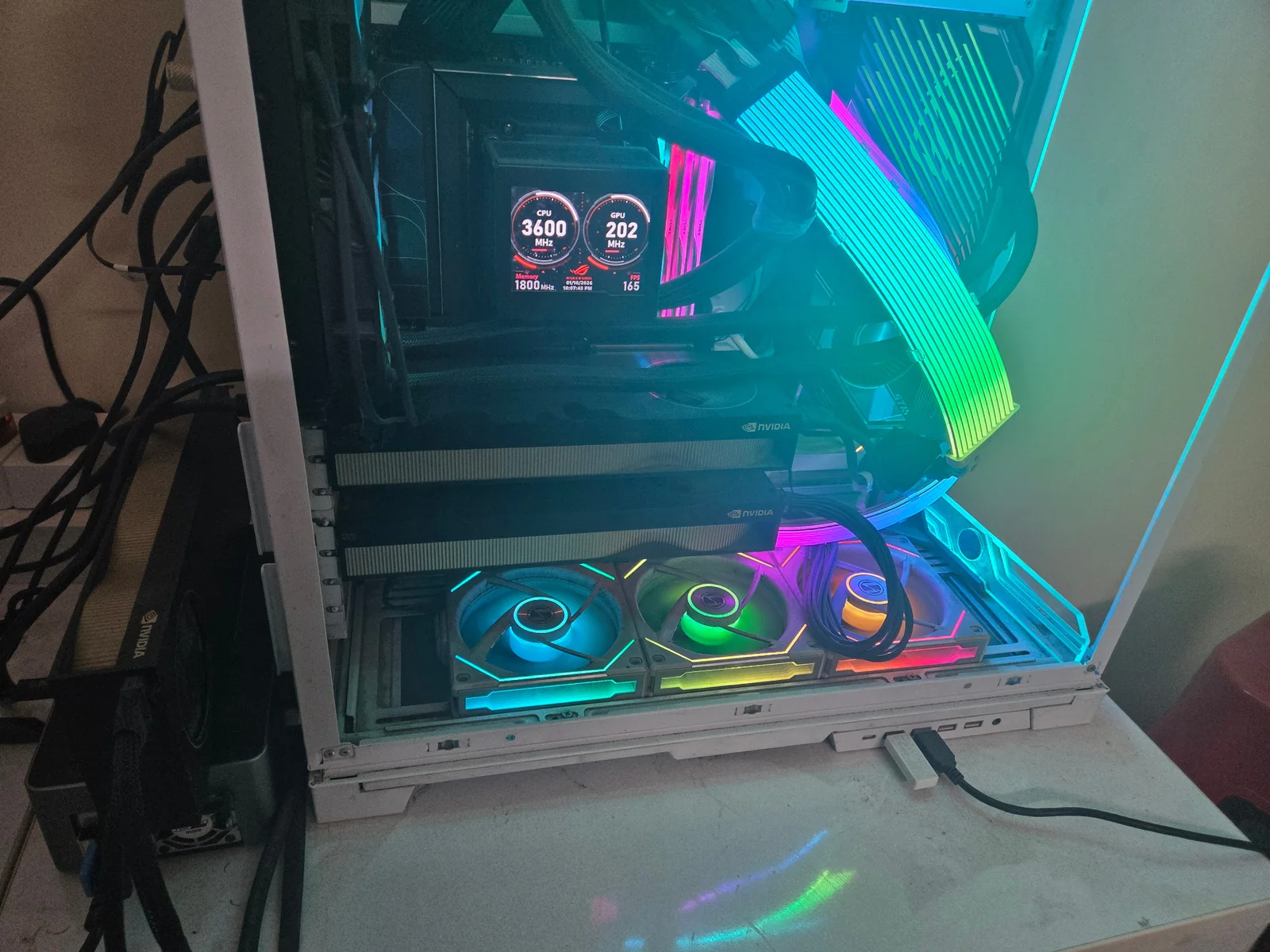
I run a mixed four-GPU workstation because I genuinely enjoy making new open-weight models work locally. That means patching inference engines when an architecture is awkward on my setup, porting low-bit quantization paths, messing with kernels, writing an MoE expert-mix optimizer, and generally refusing to accept “you probably need a server for that” as the end of the conversation.

I use the setup for my own coding agents and experiments. The hands-on systems work transfers nicely into research, but most of it exists for the much simpler reason that I think this technology is ridiculously interesting.

Current unsolved systems problem: cable management.
My multi-GPU workstation with several GPUs installed inside and beside the case.
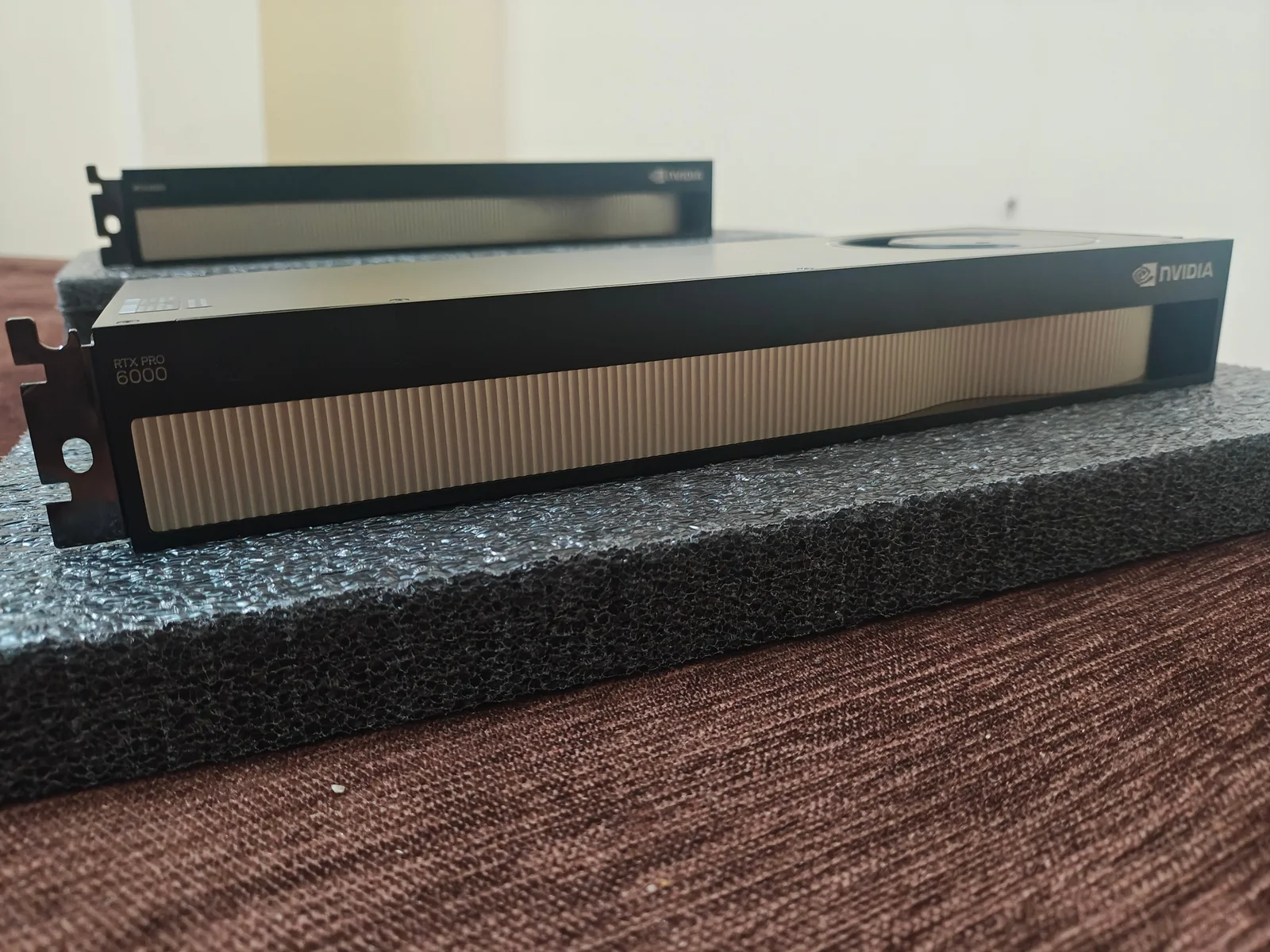
Close-up of an NVIDIA RTX PRO 6000 card.My desk and local AI setup.
home lab / playground / occasional space heater

And then there’s the day job.

Useful reality checks are underrated.

I work on privacy-focused AI systems at PrivaSapien, where I’ve gone from intern to Privacy Research Scientist (AI). The work has included multi-agent systems, document-grounded assistants, privacy-preserving inference, privacy threat modeling, research, mentoring, and conversations with people who actually have to use the systems we build.

I like that part of the job: technical ideas have to survive actual requirements, messy documents, changing user inputs, governance constraints, and people who quite reasonably do not care how elegant the architecture looked in a diagram.

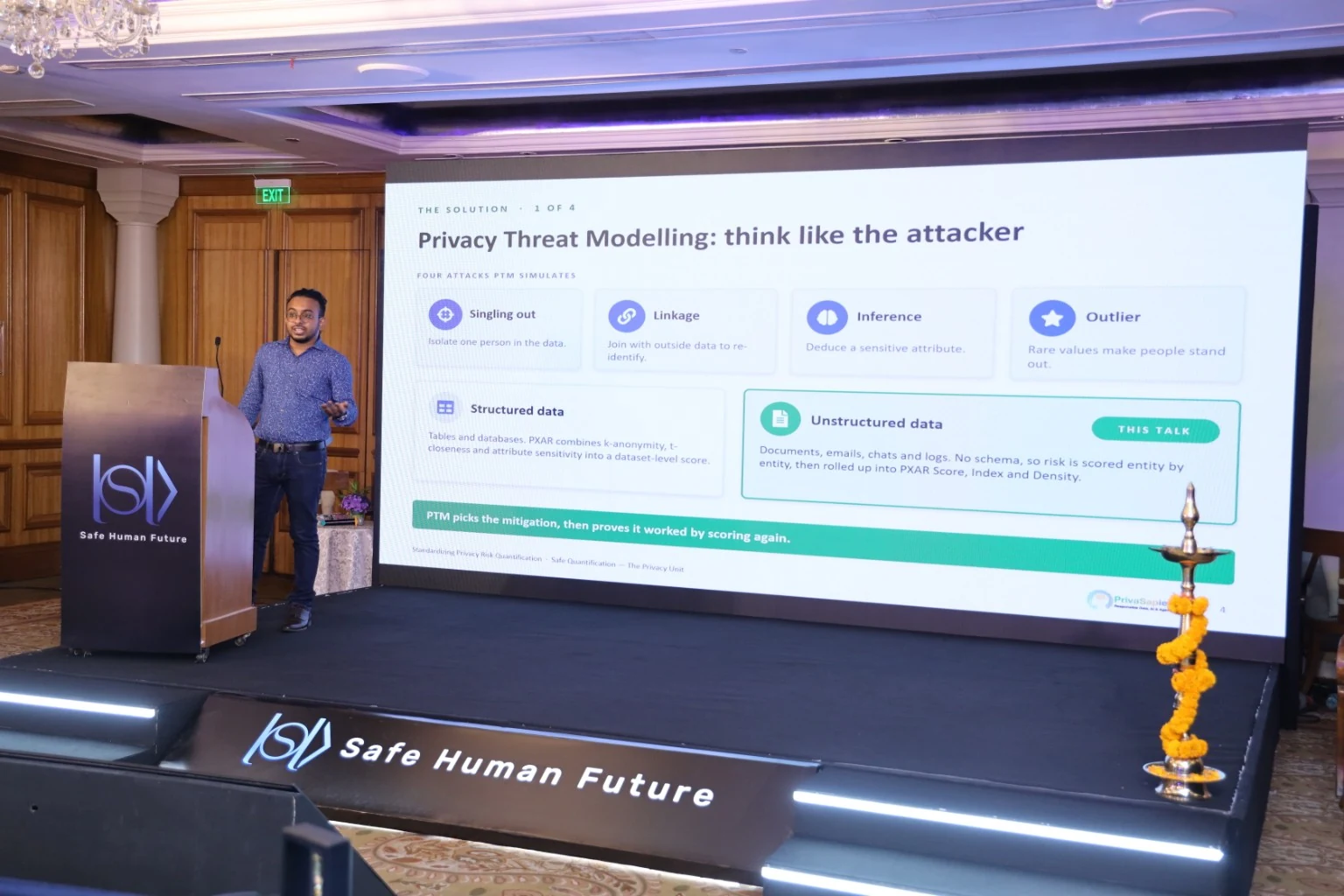
Me giving a talk on privacy threat modelling at a PrivaSapien event.
talking about privacy threat modelling, which is much calmer than combat robotics but only slightly

Elsewhere on the internet

The serious documents are one click away if you actually need them.